.png)
Menopause Skin Changes: Why They Happen & How to Support Your Skin (Without Overdoing It)
Menopause is a normal life transition—but it can bring skin changes that feel unfamiliar, frustrating, and sometimes difficult to talk about. Many women notice that what used to work (a trusted moisturiser, a favourite serum, even a simple cleanser) suddenly isn’t enough—or becomes irritating.
If you’re experiencing dryness, sensitivity, dullness, more visible lines, or a general “tired” look, you’re not imagining it. These changes are common and they have real biological drivers.
This guide explains:
why menopausal skin changes happen
what you can do at home (simple, realistic steps)
what treatment options exist if you’re new to aesthetic treatments
a straightforward way to start a professional home routine
Important note: This blog is general education and can’t replace an individual skin assessment—especially if you have rosacea, eczema, persistent acne, pigmentation concerns, or are using prescription products.
What Menopause Does to Skin (The Biology in Plain English)
During perimenopause and menopause, oestrogen levels decline. Oestrogen supports several functions that keep skin looking and feeling resilient, including:
Collagen support (skin structure and firmness)
Elastin support (skin “bounce”)
Natural moisturising factors and barrier function (comfort and hydration)
Wound healing and inflammation regulation (how reactive the skin feels)
As those supports reduce, skin may become:
drier and more sensitive
less firm, with more noticeable fine lines
more prone to creasing, especially around the eyes and mouth
duller, due to slower cell turnover
more reactive to products you previously tolerated
Common Menopausal Skin Concerns (And What They Often Feel Like)
1) Dryness and tightness
Often described as “my skin feels tight even after moisturiser.”
2) Increased sensitivity
Stinging from products, redness, or a compromised barrier.
3) Fine lines and texture changes
More visible lines, rougher texture, makeup not sitting the same way.
4) Laxity and volume shift
Softening around the jawline, cheeks, and mid-face can become more noticeable with time.
5) Pigmentation changes
Some women notice uneven tone or sunspots becoming more prominent (often linked to cumulative sun exposure).
The Two Biggest Drivers of Skin Ageing (And Why Both Matter)
Internal (intrinsic) factors
age and genetics
hormone changes (including reduced oestrogen)
overall health and inflammatory load
External (extrinsic) factors
UV exposure (often the biggest modifiable factor)
smoking and pollution exposure
sleep, stress, nutrition, alcohol patterns
harsh skincare routines or over-exfoliation
Clinical point: Menopausal skin often does best with fewer steps, better steps—not a “stronger and stronger” routine.
A Simple, Menopause-Friendly Skincare Plan (Beginner Safe)
If you’re unsure where to start, use this as your baseline:
Step 1: Cleanse gently (especially at night)
Choose a cleanser that doesn’t leave the skin squeaky or tight. If your skin feels stripped after cleansing, it’s a sign to switch.
Step 2: Repair the barrier before chasing actives
A compromised barrier can make almost any anti-ageing active feel “too strong.” Hydration + barrier support usually come first.
Step 3: Introduce anti-ageing actives gradually
Retinoids, acids, and brightening ingredients can help—but only if your skin tolerates them. More is not better. Consistency and tolerance are the goal.
Step 4: Daily SPF (non-negotiable for most anti-ageing goals)
If you want to improve signs of ageing, sunscreen is often the most important daily habit.
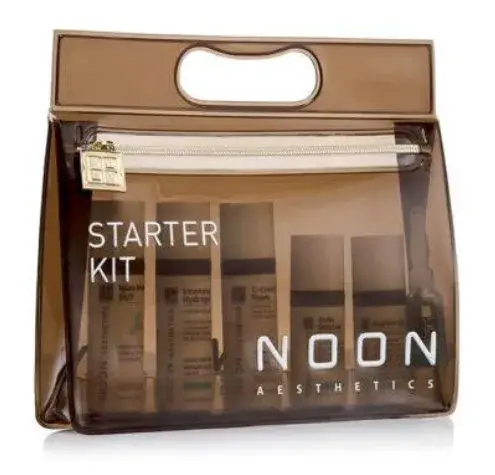
Product Pathway: Noon Aesthetics Anti-Aging Starter Kit (A Structured Start)
For many people in menopause (especially those new to professional skincare), the challenge isn’t motivation—it’s knowing what to use, in what order, and how often without irritating the skin.
A starter kit approach can help because it reduces guesswork and supports consistency.
Why a “starter kit” can be helpful for menopausal skin
it’s a structured routine rather than random product mixing
it helps you introduce active ingredients more methodically
it’s easier to track what’s helping (and what isn’t)
If you want a simple, guided routine to begin with, you can read more about the Noon Aesthetics Anti-Aging Starter Kit here:
What If You’re New to Aesthetic Treatments?
If you’re considering in-clinic treatments but feel unsure, it’s completely reasonable to start with education and a plan.
Here are common options, depending on your skin and goals:
1) Professional skin assessment (often the best first step)
A good assessment clarifies:
what your skin is doing (barrier, pigmentation, vascular redness, dehydration)
what’s realistic at home vs in clinic
what to start, what to avoid, and what order to do things in
2) Skin rejuvenation treatments (texture + glow)
Treatments like chemical peels and microneedling may support texture and radiance when appropriately selected and timed.
3) Injectables (when suitable)
Some patients choose injectable options (e.g., skin boosters, volumisation) after careful assessment. These aren’t “better” than skincare—just different tools for different goals.
Ethical note: The right outcome may be skincare only, a phased plan, or no treatment at all if expectations or risk factors aren’t aligned.
When to Pause and Ask for Help
Please seek a professional review if you have:
painful acne or worsening breakouts
persistent redness, burning, or peeling
pigment changes that worry you
bleeding, crusting, or new/changing lesions (medical review is important)
Book a Menopause Skin Consultation (Optional, Supportive)
If you’d like personalised guidance, we can build a simple plan around your skin, sensitivities, lifestyle, and goals.
(We’ll talk through options, expected timelines, and what’s worth doing now vs later—no pressure to proceed.)
FAQ
How long does it take to see skincare changes in menopause?
It varies. Many people notice hydration/comfort changes sooner, while texture and visible ageing changes often take longer. The aim is steady improvement without irritation.
Can I use strong retinol in menopause?
Some can, some can’t—especially if sensitivity has increased. A gradual approach and barrier support are key.
Do I need aesthetic treatments?
Not necessarily. Many people do well with a structured skincare routine and targeted treatment only if it fits their goals and risk profile.